Featured
Facts About The Benefits and Cons When Considering Housin...
Unknown Facts About Understanding Your Legal Options Conc...

Getting The Your Introduction to How Specialty Counselors...

Getting My Chapter 13 Fundamentals and Qualifications To Work
Table of Contents
That liberates cash in the brief term, and you may have three to 4 years to save toward the negotiation amount. Extremely dangerous to credit ratings, mainly due to missed out on payments and an adverse "worked out" mark that could remain on your credit record for up to 7 yearsMay be only choice if other options (financial debt combination, equilibrium transfer bank card, financial obligation forgiveness) aren't possibleTypically needs a charge to the 3rd party, which can offset some or all of the savings from debt settlementMay assist you stay clear of personal bankruptcy if you've missed numerous paymentsNot all creditors collaborate with financial debt settlement firms Financial obligation forgiveness might be best for you if you are experiencing an economic hardship that makes it nearly impossible to pay down your financial debt equilibriums.
With a DMP, you make one regular monthly settlement to the credit scores therapy agency. Those funds are then dispersed to creditors of your unsafe financial debts, such as credit score cards and installment fundings. The firm deals with your lenders to reduce rates of interest or forgo costs, yet some lenders may refuse such giving ins.
A financial obligation consolidation lending combines your eligible financial debts into one brand-new loan. It can aid you pay for financial obligation if you have the ability to protect a lending price that's less than the average price of the accounts you're consolidating. However, you have to abstain from racking up financial debt on those newly removed accounts or your debt could expand also greater.
![Freedom Debt Relief vs. National Debt Relief [2026] FinanceBuzz](https://www.infographicbee.com/wp-content/uploads/2020/08/what-is-debt-relief-infographic.png)
That provides you lots of time to get rid of or substantially reduce your equilibrium while making interest-free payments.
Excitement About Actual Experiences from Individuals Who Achieved Relief
You might need it if your lender or a debt collector ever tries to accumulate on the debt in the future. The letter can prove you do not owe what the debt collection agency's records show. Yes, most of the times, the internal revenue service considers forgiven financial debt as taxable income. When a lender forgives $600 or more, they are required to send you Type 1099-C.
Financial obligation forgiveness or settlement usually hurts your credit report. Anytime you work out a financial debt for much less than you owe, it might look like "worked out" on your debt record and influence your credit history for seven years from the date of settlement. Your credit can also go down significantly in the months bring about the forgiveness if you fall behind on payments.
See This Report on Questions You Should Ask Prior to Enrolling
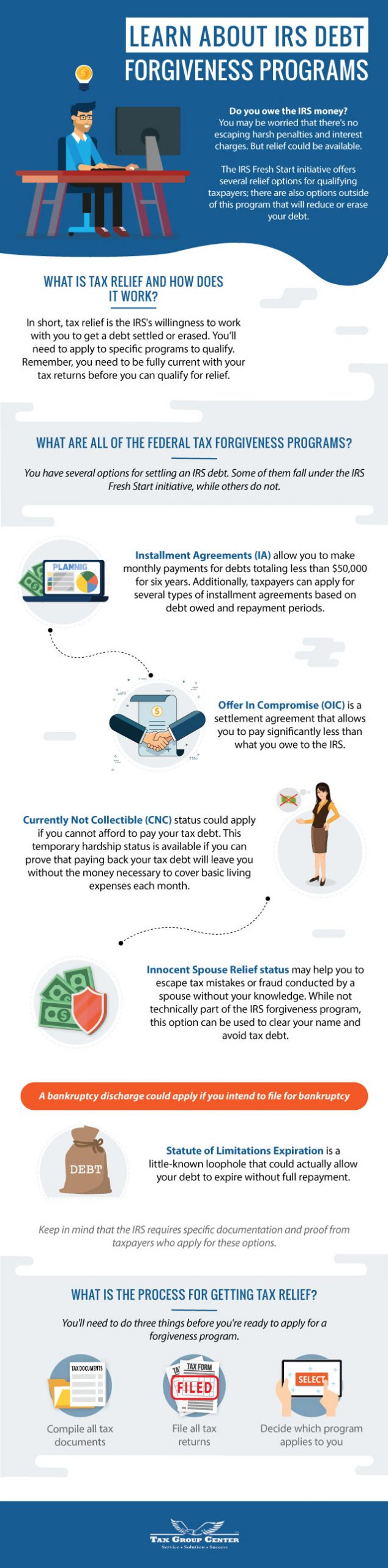
Tax financial debt concession programs Tax obligation financial debt occurs when the amount of tax obligations you owe exceeds what you have actually paid. This circumstance frequently arises from underreporting earnings, not filing returns on time, or discrepancies located throughout an internal revenue service audit. The consequences of building up tax obligation financial obligation are serious and can consist of tax obligation liens, which give the internal revenue service a legal claim to your residential or commercial property as safety for the financial obligation.
Incomes and Financial institution Accounts Internal revenue service can levy (take) salaries and financial institution accounts to satisfy the debt. Property Seizure In severe instances, the Internal revenue service can confiscate and offer residential or commercial property to cover the debt.
Anxiety, anxiety, and other mental health and wellness issues. Social Preconception Dealing with lawsuit from the IRS can lug social preconception. Damage to reputation and relationships. Employment Opportunities A poor credit history as a result of strain financial obligation can limit job opportunity. Difficulty searching for or maintaining a work. Federal government Advantages Tax debt might impact eligibility for government benefits, such as Social Security and Medicaid.
What Does Post-Achieve Financial Stability with Counseling : APFSC Help and Group Resources Do?
The OIC takes into consideration numerous elements, including the taxpayer's revenue, costs, property equity, and capability to pay. Efficiently discussing an OIC can be complicated, needing a comprehensive understanding of the IRS's standards and a strong debate for why your offer aligns with your capacity to pay. It is very important to keep in mind that not all applications are approved, and the procedure needs comprehensive monetary disclosure.
The internal revenue service evaluates your overall financial situation, including your income, costs, possession equity, and capacity to pay. You must additionally be current with all declaring and settlement needs and not remain in an open insolvency proceeding. The internal revenue service likewise considers your compliance history, assessing whether you have a record of prompt declaring and paying taxes in previous years.
The smart Trick of Actual Testimonials of Families Who Found Relief That Nobody is Discussing
The application procedure for an Offer in Concession involves several comprehensive actions. Initially, you need to complete and submit IRS Type 656, the Offer in Compromise application, and Type 433-A (OIC), a collection info declaration for individuals. These types require extensive financial info, including details about your earnings, financial debts, expenses, and properties.
Back tax obligations, which are overdue tax obligations from previous years, can considerably enhance your overall internal revenue service financial debt if not attended to without delay. This financial obligation can accumulate rate of interest and late repayment penalties, making the initial quantity owed a lot larger gradually. Failing to repay taxes can lead to the internal revenue service taking enforcement activities, such as providing a tax obligation lien or levy against your residential or commercial property.
It is very important to attend to back tax obligations as soon as possible, either by paying the total owed or by arranging a payment plan with the internal revenue service. By taking aggressive steps, you can prevent the build-up of extra passion and fines, and protect against more hostile collection activities by the internal revenue service.
One usual reason is the idea that the taxpayer can pay the total either as a round figure or through a layaway plan. The IRS also thinks about the taxpayer's revenue, expenses, possession equity, and future earning possibility. If these elements show that the taxpayer can manage to pay more than the offered amount, the internal revenue service is most likely to reject the deal.
How This Organization Method to Reach Achieve Financial Stability with Counseling : APFSC can Save You Time, Stress, and Money.
It is critical to supply exact and total details in your application and to seek advice from a tax obligation expert to boost the opportunities of acceptance. Handling IRS debt can be complicated and daunting. Tax obligation specialists, such as Certified public accountants, tax lawyers, or registered agents, can provide indispensable support. They have the proficiency to navigate the details of tax obligation legislation and internal revenue service procedures.

Table of Contents
Latest Posts
Facts About The Benefits and Cons When Considering Housing Counseling for People with Non-Traditional Income (Gig Workers and Contractors) Uncovered
Unknown Facts About Understanding Your Legal Options Concerning Debt Forgiveness

Rumored Buzz on A Guide to Debt Forgiveness in 2024
More
Latest Posts
Unknown Facts About Understanding Your Legal Options Concerning Debt Forgiveness
Rumored Buzz on A Guide to Debt Forgiveness in 2024